

It seems odd, at first glance, to juxtapose religion and innovation. Religion is typically associated with tradition, continuity, and preservation rather than experimentation or novelty. Yet religious communities have always had to respond to new technologies, new moral dilemmas, and new social realities. In moments of rapid social change throughout history, religions have consistently faced the challenge of remaining true to their core commitments while responding creatively to new circumstances.
How do they navigate this process? Is it right to call this process “innovation”? And besides religions adapting internally, how do they contribute to what we ordinarily consider innovation, say in business or technology? And has “innovation” itself become a quasi-religious criterion of worth today?
My guest in this episode has done considerable work to address these questions.
Dr. Marco Ventura is Professor of Law and Religion at the University of Siena, and has long worked on questions of freedom of religion or belief in European and international law. He’s advised the European Parliament, the OSCE, and several governments on religion and rights; directed the Center for Religious Studies at the Fondazione Bruno Kessler in Trento; and chairs the G20 Interfaith Working Group on Religion, Innovation, Technology, and Infrastructures. He is the author of numerous books and articles, including From Your Gods to Our Gods and Nelle mani di Dio: La superreligione del mondo che verrà. Over the past decade, he has helped shape an emerging field examining the encounter between religion and innovation.
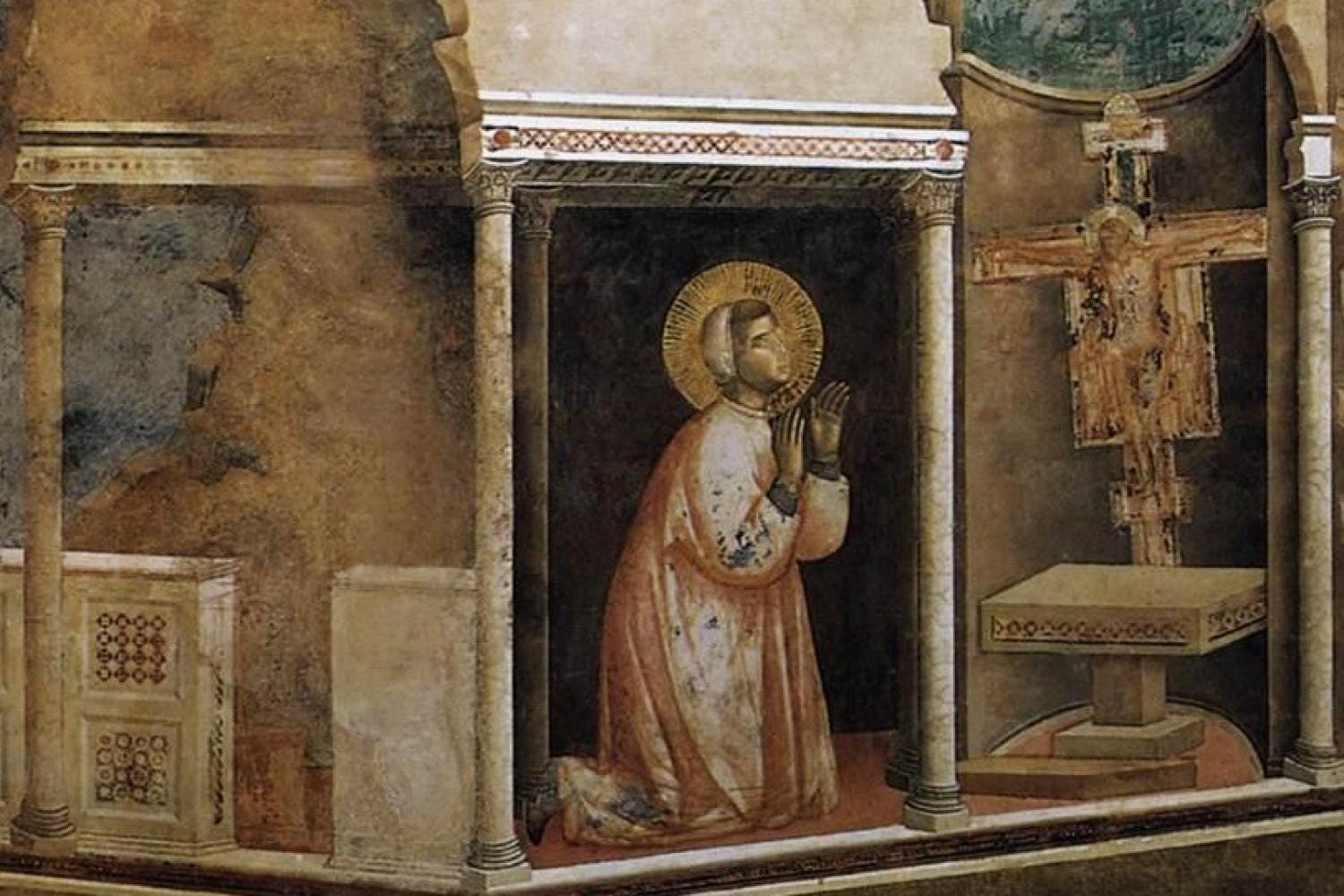
In our conversation, Marco argues that innovation in a religious context is not simply about adopting new technologies. It is about the deeper question of how traditions renew themselves. One of the metaphors he turns to is the famous story of St. Francis of Assisi hearing the call to “repair my church.” Francis initially interpreted this quite literally, setting about rebuilding a crumbling chapel with his own hands. Only later did it become clear that the deeper task was not architectural but spiritual: renewing the life of the Church itself. For Marco, that story captures the dynamic of religious innovation. Sometimes renewal begins with repairing a small structure. Sometimes it leads to reimagining the entire mission.
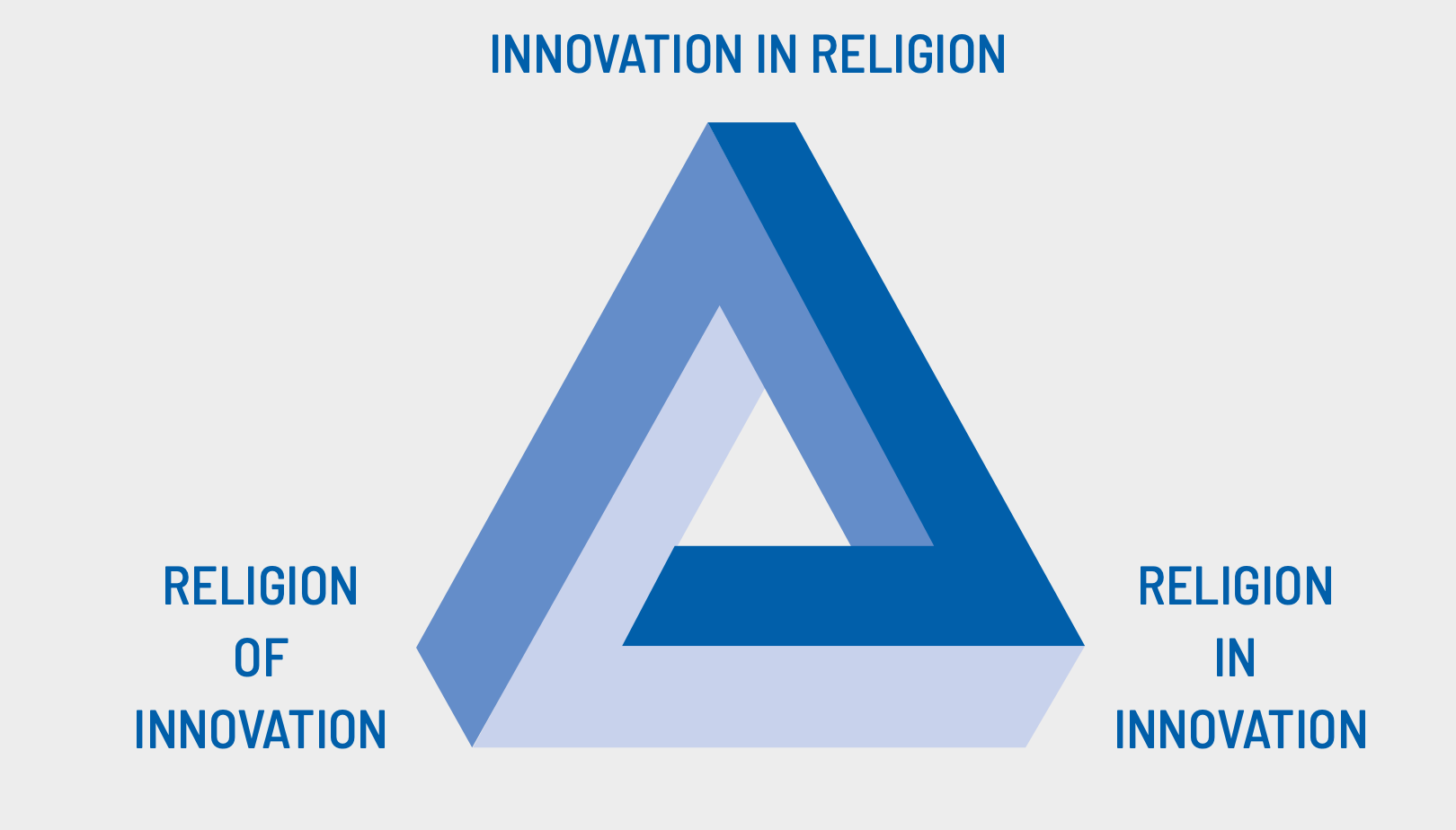
Marco pushes back against the idea that innovation is simply synonymous with technology. Many of the most important forms of innovation in religion are social rather than technological: new ways of organizing communities, new forms of dialogue across traditions, and new frameworks for engaging global ethical challenges. That is why he and his colleagues chose the language of “innovation” rather than simply “technology.” The point is not only to track new tools, but to understand how religious actors themselves participate in shaping the moral and institutional frameworks that govern emerging technologies. And they argue that it is important, when studying this relationship, to look at not only innovation “in” religion, but also religion “in” innovation, and innovation “as” religion.
In a world where global agendas around technology and infrastructure are increasingly set by corporations, Marco argues that religious communities have an important role to play. They bring traditions of moral reflection, long historical memory, and deep concern for human dignity to help guide innovation toward more humane ends.
You can listen to the full conversation in two parts (here and here) wherever you get your podcasts, watch the episode on YouTube (click image below), or read the unedited transcript that follows.
Brandon: Hi, Marco. It’s really great to have you on the podcast. Thank you for joining us.
Marco: Hello. Thank you for having me.
Brandon: Yeah, you’re welcome. You’re welcome. So I usually like to ask my podcast guests, when we start, to share a story about an encounter with beauty from their childhoods. And so I wonder what kind of story came to your mind when I posed that question.
Marco: Well, this is probably not early childhood, but slightly later, when I was an early teenager. I grew up in Perugia, which is a city in Italy, very close to Assisi, the place of St. Francis. Growing up in a Catholic Church, we used to go to Assisi and visit the place. At the time—say, mid- to late ‘70s—there were a lot of newly-established, pretty spontaneous Christian communities on the mountain of Assisi, which is called Monte Subasio. I remember one visit which really struck me and which was really defining for my life. It was a visit to this place—a very simple, a very spontaneous community, not definitely Catholic even, more generally Christian, sort of into denomination. There was a little chapel, sort of a Romanesque chapel style of the place.
Within this chapel, which was just enlightened by a few candles, there was a painting by a contemporary painter. So in that sort of traditional environment, Romanesque church, very much of natural surroundings, all of a sudden, I saw this image of Christ in a contemporary art style. Very colorful, very bright, very modern, even postmodern, really avant-garde contemporary art. This was, to some extent, to me, I felt it. I really felt there was something which was complete and perfect in that experience, which I would now consider—well, of course, also for the sake of our conversation—a sort of perfect balance, a moment of grace about the balance between something old and traditional, made of man genius, in a way, the Romanesque architecture going back in centuries, but also naturalistically very powerful in the context of Monte Subasio. And at the same time, you also had the modern and contemporary genius and the idea that a very modern painting could fit in that place, which really spoke to both my need to be in touch with my time in the future, while feeling that my spiritual quest could be rooted in a long-lasting effort of mankind.
Brandon: Wow. Yeah.
Marco: This is the episode that comes to my mind.
Brandon: Yeah, that sounds fantastic. It seems to integrate not just tradition and innovation, but also the sense of a future-minded, like a longer-term, sustainable way in which the tradition can adapt and survive and extend itself in some kind of creative way.
Marco: You remember that one of the early experiences that changed the life of St. Francis was the encounter with a church in ruin. In my imagination of the time, it would have been exactly more or less the same case. You know, this little chapel somewhere, that very place, or a few meters away. When St. Francis had this experience, it is said to have heard a voice, a voice telling him, “This is the church. This is my church. We have to repair my church.” So there’s a sense of something broken to be repaired, something ruined to be restored. The fact that this could be done in modern times—not just by recreating the things exactly as they might have been in the past, in a sort of pristine state, but as they can be, imagining a new way for the future—this is also, I believe, very powerful. So “repair my church,” in that case, which of course can be a metaphor of a much broader meaning, it doesn’t necessarily point at just looking at the past. It’s really about looking at the future, in a sense, which is what the spirituality of St. Francis was all about, by the way. So that’s where I grew up. That’s where I grew up in all senses—not just geographically, but also spiritually.
Brandon: Wow. That’s profound, yeah. Thank you.
Talk a little bit about your career trajectory. I mean, what drew you to the study of law and then to that relationship between law and religion and then eventually to this topic of innovation? Could you just trace for us a little bit of that journey?
Marco: Yes, I’ve always been interested in the technological challenge to religions in general, Christianity in particular—and, being Italian, the Catholic Church even more particularly. Of course, my generation in Italy was strongly impacted by the debate on abortion and legalization or decriminalization of abortion in Italy. Catholics were somehow divided about the issue. So this was a time of debate and even renewal in the Catholic Church. In the end, the law was adopted and even voted for confirmed in a referendum. I’m not going into any legal technicalities here. But there was really a strong popular support in a country which was, at the time, at least formally much more Catholic than today—which means that Catholics were in favor. This was a crucial distinction at the time, not necessarily of abortion as such—this was not the point—but on the right to choose protected by the state. Well, in that context, of course, abortion was not that much about technology. It was about medicine. At the time, some early already emergence of bioethical discussions. So, of course, that was a time after the Second Vatican Council where bioethical and sexual moral issues were very much under discussion.
But when I then, in ‘89, started my PhD in Strasbourg, in France, I thought that the debate on assisted reproduction, which was exploding at the time, could be the ideal place for me and the ideal subject for me to develop that investigation, that research. So it was going back very much to developments in especially Western Europe about abortion rights. But technology was now playing a very relevant role in assisted reproduction. I mean, in 1987, the Congregation for the Doctrine of the Faith of the Catholic Church adopted a document which basically condemned all forms of assisted reproduction. So there was a reference. I was doing my legal research, my legal studies. So that was very interesting from a legal perspective. Plus, I was in France. France was starting the discussion, which then led, in 1994, to the adoption of the bioethical laws. In that context, I started taking this strong interest for the encounter of technologies—in that case, the human body and religion. So this was really the starting, the initial point. Then I developed it through biotechnologies. So this traveled after my PhD into biotechnology. Little by little, digital technologies became more and more relevant. One example of that transition, that journey, in terms of interest and investigation from technologies applied to the human body discussion of the ‘80s, into a more general interest about technology. And I think that’s where my interest in religion and innovation is really rooted. That was the train to experience. I don’t know if you want me to already take that or you want to ask me something.
Brandon: Yeah, feel free to say a bit more.
Marco: I had the opportunity to write a report to the European Parliament on the perspectives about the patentability of human materials. That was in the early 2000s. So it was already transitioning, as I mentioned, from assisted reproduction to a much broader work, on the patentability of the human.
Then we can jump almost 15 years later. I was appointed as the director of a research center in a northern Italian research institute, which is called the Fondazione Bruno Kessler. My task was to actually rethink the mission of a small center for religious studies in the context of a pioneering institution for research on ICT, technologies of information and communication, in Europe. Because FBK was one of the early places for even artificial intelligence in the late ‘80s in Europe.
The work that had been done in this Center for Religious Studies was already very strongly focused on a conversation with engineers and computer scientists. So it was a pretty easy task from my side to make it more relevant, to give some shape, because that’s what I did with the group of researchers. We just gave a different shape to what had been done already in advance. And when it came to find a way, an efficient way, to describe what it was all about, the idea came not to just focus on technology—not technology and religion, not internet and religion—but rather to broaden the scope of the investigation, I think, of innovation as the key word and concept. So the center was reframed as a center for the research and action on the encounter of religion and innovation.
Brandon: You said a bit about what the term innovation means in that sense and how did you all define it. Were there any controversies around the use of that term and the choice of that term?
Marco: Well, of course, technology is important. To some extent, the term “innovation” was adopted because it clearly pointed to technology. But at the same time, we didn’t want to just take technology, which seem to us to be very flat and somehow superficial in terms of where we wanted our research and action to go. Innovation is technology, but innovation is also beyond technology. And so our understanding of innovation as we then worked it out was, on the one end, innovation in science and technology for the business—the more sort of traditional understanding of innovation—but also social innovation. This was very, very important for our group.
Now, these two concepts are still conventional concepts of innovation, both of them. There’s a, of course, community of reference, of course, with strong differences. The way social innovation is understood at the University of Stanford is not the same as it is understood at the Commission of the European Union, of course. But it is a sort of technical expression. It’s a conventional expression. Social innovation refers to a debate, to a community, to literature. And even more so, of course, innovation in science and technology for the business. So this really was the core of our work. But because of the, I’ll say, social and cultural salience of this use of the word innovation, we know then that that word travels. That word is then looked at as a reference in linguistic and conceptual from communities, research communities, and people, and possibly organization, which do not focus on innovation as it’s specifically defined. So we can then think of theological innovation, or legal innovation, or spiritual innovation. This was also a part of our mission to some extent.
So we divided—this was our approach, to divide—the understanding and definition of innovation in two categories. One category is conventional innovation, which will go from innovation of science and technology to social innovation. On the other side, innovation as a term which is used without a specific accepted meaning in a given context, which is still used significantly so.
Brandon: Your group convened a number of workshops and experts from really a variety of domains. And then you came up with a position paper that really, I think, is quite influential in setting out an agenda, mapping a conceptual framework, as well as an agenda for research on this theme. Would you be able to summarize perhaps some of the key highlights of that position paper and the conclusions that your group arrived at?
Marco: Yeah. Well, first of all, as myself a legal expert on religion, my work is strongly influenced by policies on religion—public policies or governmental policies of religion. Just think of religious freedom issues, for instance, to policies of religious authorities and religious organizations, faith-based organization. I wanted this sense of strategizing and positioning to be center in our work. In other words, our work was not understood as a merely speculative work. Our interest was to engage actors, to be able to talk to actors.
Brandon: To inform policy primarily?
Marco: Yeah, in terms of listening from actors and engaging with actors. This is why the Sustainable Development Goal agenda was important. Because, of course, the framework at the UN level and, of course, in other contexts had emerged by that time as a framework of reference based on innovation. At the same time, we were observing an increasing and growing mobilization from the religious actor’s side to have a voice at that table in that context. So we really wanted to start our position paper by the acknowledgement that we were observing both trends—a trend which puts innovation at the center of growth and at the center of the SDG’s challenge and, on the other side, religions wanting to play a role in that context.
So this is how we formulated our central question. If religions want to have a voice at the SDGs, in the effort towards the SDGs, that effort needs to be based on innovation. How will we connect innovation and religion? That’s the first image, the first graphic figure, that we wanted in the position paper. Then the second step was: How do we conceptualize the encounter of religion innovation? We adopted a triangular shape to express this encounter, starting with how religious communities and traditions understand and experience innovation within—through their resources, through their capital, through their dynamics. And then moving to the second corner, the second dimension, which is how then religions contribute to innovation in society, in the market. And third, a third corner, a third dimension: How does innovation per se can become a faith, can become a quasi-religion or a religion?
Finally, third step, we offered 11 recommendations. We tried to sort of concentrate the outcome in a set of recommendations which are methodological recommendation, possibly guiding reflection, but also the encounter of actors. One very important point for us, which is probably very telling in terms of the work, was the 11th recommendation. So a sort of closing close, which is: when you engage with innovation and when you engage with religion, let’s keep it as open-ended as possible. You don’t need to be the progressive pushing religion to necessarily change in one direction of the other. So let’s make room for conservatives in this discussion. Let’s make room for the language of tradition. At the same time, you don’t need to be an innovation guy. You don’t need to be an enthusiastic, if not, a fanatic of innovation, to be involved in this discussion. We want the discussion to be critical of innovation. So this was our closing recommendation: Let’s make room for a critique of innovation. Let’s make room for a critique of religion from all possible sides.
Brandon: Great. Could you perhaps share any of the tensions within the group that emerged, any points of disagreement, maybe especially around the use of the term innovation? Because certainly, there are, in some religious communities, I think, a lot of suspicion around the concept of innovation. But it would also in the European context, just because of its baggage, that it’s tied to the world of business and capitalism, particularly Americanism around it. I’m curious to know what kinds of tensions emerged in critiques of that concept of innovation?
Marco: Well, Brandon, I would use an example here, okay?
Brandon: Sure.
Marco: Let’s think of any high-tech lab in Germany, or France, or Italy. Let’s figure out, let’s imagine the people at their desk or at their screens and the people who do innovation in their different capacities and roles. Let’s assume that that lab is an industrial lab, without any faith orientation at all at any level, okay? Can we imagine that someone in that workforce, in that lab, has a spiritual view, has a faith orientation? Well, I suppose that there will be someone. Not all of them. All of them would have their orientation, their worldview, however you categorize it. How do we categorize that person?
Well, this would be the more easy example to give. Let’s imagine that one of them is a Muslim, or that she is a Hindu, or even beyond that. You don’t need that person to be clearly belonging to any official faith. How do we make sense of their presence in the lab? Can we categorize the contribution of that man or that woman to that lab, to that enterprise of innovation, somehow connected to religion and innovation? This is the challenge. This is the challenge that we face in my group, which is a challenge of categorization. Because of the novelty and challenge of this categorization, it’s a challenge in terms of lack of state of the art, in terms of lack of literature. Because if you don’t frame your research in those terms, there’s no literature. And has this not been done, there’s no literature.
Serious researchers will somehow stop at that, simply because it’s not being done. And when you work out a deduction — because mind is a deduction. Of course, we have various hobbies. I’m not saying that nothing has been done. But very little has been done. You really need to look for that little, starting with some assumptions from some hypothesis. This is the biggest challenge. But I’m extremely grateful to my group of researchers—extremely, extremely serious. Because they were really challenging me at this level in terms of even the reputation of our lab, even the reputation of our research group. How can we move in that direction with no literature, with no state-of-the-art? How can you do that?
Well, in the end, we were somehow able to move forward. We used some references in digital religions sometimes, some projects, some partnership with the tech guys within our institution. Then we also ran ourselves some interviews. So when we wrote a policy paper for the EU, we referred very much to interviews that we had run with respondents, with faith-based respondents. Some of their statements were actually in the paper. I remember a statement from a Jehovah’s Witness person, a scientist, a scientist who qualified himself as a Jehovah’s Witness, who said, “Of course, what I do with artificial intelligence as an engineer belongs to my faith.” He gave some theological explanation on how this was playing out. And so we were able somehow to go beyond that difficulty. But we needed to fully acknowledge that objection, to fully acknowledge that challenge. Because that’s a serious objection and that’s a serious challenge.
Brandon: I suppose when you’re building a field that doesn’t exist, this is going to always be the state of affairs, where there really isn’t an established body of work. Yeah, I mean, I think perhaps Benoît Godin was one of the few scholars who had been working on this theme, but not very many others. I think it still remains a challenge, even in a number of disciplines, to see this as a fruitful lens through which one can study religion. Aside from the question of literature, there do seems to be a number of other obstacles. I think, yeah, there’s still an uphill battle to try to build such a field.
(outro)
Brandon: All right, everyone, that’s a great place to stop the first half of our conversation.
In the second half, we turn more directly to: the beauty and burdens of this work, the difficulties of building a new field of study, the way markets and technologies function as rival meaning systems, the tensions between resistance and retrieval in religious responses to innovation, and the risk of political polarization. We also hear why Marco thinks that artists should be crucial partners in reimagining our economic and religious futures.
See you next time.
PART TWO
(intro)
Brandon: I’m Brandon Vaidyanathan, and this is Beauty at Work—the podcast that seeks to expand our understanding of beauty: what it is, how it works, and why it matters for the work we do. This season of the podcast is sponsored by Templeton Religion Trust and is focused on the beauty and burdens of innovation.
Hi, everyone. Welcome to Beauty at Work. This is the second half of my conversation with Professor Marco Ventura on innovation and religion. Please check out the first half if you haven’t already.
In the second half, we’re going to turn towards the burdens and pitfalls of focusing on innovation, including how markets and technological change can act as competing religious systems, the ambivalent responses of religious actors. We’re also going to look at how practices on the ground, like offering phone charging towers at a papal youth gathering, could reveal more about the future of religion and technology than even the most sophisticated ethical statements.
Let’s get started.
(interview)
Brandon: Do you see this as worthwhile overall in the face of, again, the conceptual baggage associated with the term? It’s very clear when you’re talking about technological innovation and trying to say, well, how do religions or spiritualities contribute to the furthering, or even maybe propose obstacles to technological innovation, et cetera, one can certainly examine that kind of work. But once you’re looking at religion as itself, the domain in which innovation happens, the big question is: Is that really the right category, or are we talking about something else? I wonder how you all had made sense of that, or what you think about the scope of that kind of inquiry. Is it worthwhile?
Marco: Yeah, of course, you have a language which is a specific language—the language of innovation—and then you have the alternative language of that specific tradition you’re examining. This is something that we absolutely wanted to take into account. So we invited a few experts on Islam to provide us some insights and references about the use of terms like bid‘ah, which is usually associated to a very negative connotation, as a departure from the path that God has indicated to mankind. But I still think that innovation as its heuristic, in the sense that to some extent, innovation is the modern and contemporary reference out there. You can oppose it. That’s my point about opposition. But your opposition cannot ignore that innovation is the language and the concept of what happens out there. Out there, of course, I mean, once again, in the market, in the lab, in the society, basically.
Brandon: I mean, even if you’re doing a doctorate in theology, you have to make an argument as to why your argument is, your dissertation, is innovate. I mean, that becomes just the taken for granted criterion of worth.
Marco: Yeah, exactly. I think this is very important. It is really an exercise in awareness and control as much as possible. So once again, it’s not an exercise in buying into something. It’s quite the contrary. It’s being aware of the need to position yourself, and explain, if you adopt innovation, why you’re adopting that terminology. So that’s how I would see it very much. In order to do that, you really need to build your field and expertise and, at the same time, a conversation with the world, the community of experts on religion—religious studies and theology, of course, but also sociology of religion, anthropology, philosophy, history, of course. But at the same time, you also need the other guys, to bring the other guys into the conversation. This is why it was so important—well, for me, personally and the group in Trento—to be a small group devoted to religion in a bigger organization, where we would come to be acquainted day after day with engineers, computer scientists, physicists, or sociologists also, and philosophers. So you really need both, in my view. You need the religious people. Well, of course, also the religious people, in the sense of the believers.
Brandon: Sure.
Marco: But of course, that’s an additional layer to what is needed in terms of methodology. But it is really a way to open up the field. And of course, I have nothing against those who prefer to adopt a different terminology. So, at the time, when we had this discussion about how to define terminologically our mission, Vienna University was somehow changing its initiative on religion. They ended up adopting the transformation word. So they redefined the endeavor in terms of looking at the transformation of religion, which is perfectly fine. But there’s a difference there of course. Transformation is probably more neutral, whereas innovation means that we want to engage directly and openly with the way the contemporary world of science and industry and the market and society and public policies is framed. That’s the difference
And the FBK, I want to mention this, under the fantastic leadership of my successor, Massimo Leone, who is an expert in semiotics, has got a great deal ahead and has developed — there’s a recent special issue of religion devoted to artificial intelligence, a religion which has been co-directed by one of the researchers. Actually, the one who made the link with Benoît Godin, his name is Boris Soreme. I wish to acknowledge his great contribution. But it’s everybody, everybody there. There have been fantastic workshops and research activities around new topics all related to innovation. And so the experience is going on.
Brandon: Okay, that’s great. That’s great. Yeah, it seems that the category of innovation as religion is a very fruitful area of inquiry, and is for us to understand how just — I mean, maybe even 100 years ago, the term was seen pretty much universally with suspicion, right? Not just in a tradition like Islam, but even certainly in Christianity, and just generally even at the political level there. Whereas I think King Edward VI or VII, I can’t remember. Maybe Edward VI in the UK had issued a proclamation that thou shalt not innovate, because religious innovation is a threat to the political establishment, right? So going from there to this sort of pejorative understanding of innovation as just being a fad, or unserious, or certainly not something that one should see as desirable to now being the prime modality of expressing something as valuable. That shift seems really quite remarkable.
Marco: Well, you can ask the big question to religious individuals and communities, traditional organization, which is, how do you change? How will you understand change? How do you decide what kind of change is desirable and what’s not? What you add to that question when you formulate that in connection with innovation is: how do you want to change by reference to market-led change? How do you want to change by reference to how technology is changing? This is the additional layer which, in my view, is absolutely necessary.
Of course, it’s a challenge because is very demanding in terms of engaging the economy and engaging economics. At the same time, it’s demanding in terms of engaging technology and engaging the market. Of course, while engaging with those dimensions, religions might also feel — well, religions as an actor is not very accurate. But for the sake of clarity here, religious actors might also feel that the contemporary market, innovation-based market, innovation-based research, science, technology, they represent a competitor. They represent a competitor of a system of meaning, a system of faith, a system of reference. This is where the third corner of the triangle, this innovation as religion is so important. It is yet another layer to our conversation which makes it very fruitful in my view. Of course, it is difficult to categorize it. This is not a question of formulating the market as a church.
Brandon: Certainly—
Marco: Although, well, one of the early guests that we had in 2016, or 10 years ago, was Harvey Cox. Harvey Cox is a theologian at Harvard Divinity School. At the time, he had just published his book, The Market as God. That was very important. That’s a thorough study about the equivalence of market items, market elements, market ingredients, and religion and faith. There’s a lot which has been done already also in that direction, in the direction of a competition—a sort of religious competition, to some extent—between the market, science, technology and religious actors. Of course, a competition. But for someone, it might also be a partnership. Who knows? This is where we then differ to actors. Of course, engage with actors. But as a scientist, as scholars, what we do at that level is that we open up the field. We offer some reflections. We are happy and available for discussion. But then I think that you have reached a threshold where you really need to know—this is also fascinating task—where you if you want to stop there, or if you want to go past that threshold, which would imply that you have an agenda. You have an agenda to push actors in a certain direction or another agenda. For instance, how to reconcile the business and churches, or the business and what in the Islamic world, how to reconcile those. And then under which conditions you want that reconciliation to happen.
Brandon: And for what reasons, right? I do think that there’s a worthwhile question to ask around the ways in which this sort of, and I really like this, this recognition of the market and technological innovation as meaning systems, as competing religious entities perhaps. Certainly, it’s true. There’s research showing that once you have the abolition of blue laws—at least, in the United States, the businesses used to be closed on Sundays, and once the businesses are open, then people can go shopping instead of going to a church or to religious service, right? So that’s a direct competitor. Sports, perhaps or another, another competitor for a lot of people as a meaning system, even for families. You used to go to church, but now you go to the soccer game, and your kids are playing. So those are competing as well. And then certainly, technological innovation, where questions of whether spending time on screens or new gadgets is a substitute for religious practices such as silence or prayer, et cetera.
And so in the face of all of these challenges, certainly, you do have a resistance. Like with now, with the rise of AI systems, a lot of religious actors who say we need to resist this. We have Paul Kingsnorth has this new book, Against The Machine, saying you need to push back against all of this stuff, this surveillance capitalism, and the kind of techno utopia that is trying to be built, and to maybe return to forms of tech-free life. I wonder how you see those sorts of responses the return to, in some part, growing pockets of the Catholic Church, the Latin mass. So these movements of trying to reclaim something from the past, to return to the past, or as sort of a mode of retrieval or mode of a retreat, now, do you see those also as types of innovations, or are they reactions to innovation? What scope is there for making sense of those concepts in relation to innovation?
Marco: Well, that’s a part of the investigation, that this to be a part of the investigation. The most relevant distinction I would draw here — I hope I’m not eluding your question.
Brandon: That’s fine.
Marco: The most interesting distinction I would draw is between—well, very old fashion kind of putting it—leading by word and leading by example. So what we observe, it’s probably very European. It might be less so in the US or elsewhere. But in Europe, there’s, of course, churches, for instance, or other faith-based actors. They are very reluctant to cross the line and become actors in the economy, for instance. Although German churches are the first employer after the state. Well, once again, it very much depends on categories and assumptions. But in general, this is not where you go in Europe as a religious authority.
Very often, what religious authorities tend to do is to offer—sometimes dictate. Let’s say, offer—a normative framework. So when the European Union Commission consulted with religious actors in general on its, at the time, effort to build a normative framework on AI in particular, policy of Europe for the ecosystem of the trust, the ecosystem of excellence—these are the European categories—what they got from churches was basically an ethical framework. So this is normative ethical framework. I don’t want to be dismissive in this regard. I don’t underestimate the importance of their contribution and its conceptual depth, because that’s very interesting to go through. Great effort, by the way. But this is still in the paper to some extent. It’s leading by principles. Whereas what the real challenge, in my view, or the core challenge, would rather be answering the question, okay, that’s your ethical reference. But then, what do you do? What do you do with your capitals? What do you do with your human resources? What do you do in Catholic or Protestant universities, in your labs? This is something I have developed almost an obsession for. So the question is: what do you actually do? What do you offer?
Recently, during the Jubilee, there was a huge gathering of the youth in Rome. The decision was to put at the disposal of the youth, in this big, big, big open space where thousands of youths gathered, ways to recharge their smartphones. So towers were available to plug in for your smartphones and recharge your smartphones. I interviewed for an Italian newspaper. I interviewed a young Franciscan sister about that experience and without me asking the question. For once, I refrained myself for advancing the innovation. So I was silent on that. She picked that example. She picked that example, and she said, “I know that this might be debatable from a Christian perspective, but I think that at the end of the day, that was a sign of welcoming people.” So you see how she read that decision. She understood the decision, first and foremost, in terms of we are inviting people to feel well here, to feel welcome here. So it also depends. Well, this is a great lesson in terms of which meaning do you attach, which meaning do you want to be attached to some step, to some action. And for me, this kind of decision, understanding these debates, possible contrary voices, this is much more telling—I’m not going to be exaggerated. I’ve overstated here—much more important than a fantastic, elaborate, articulated statement about the ethics of AI. Also, because this is more challenging for actors, this is really where you push actors to come out, also to compromise themselves with reality, in a sense. You really need to show who you are. I know that this is difficult, but I think that this is where research, as well, needs to go.
There’s another, if I can mention this, there’s another aspect why I think that this is crucial. This is also where our discussion on freedom can be better placed. That’s where we can have our discussion on freedom, including religious freedom. If you understand innovation in these terms, innovation and religion can really be very beneficial for a renewed discussion of: What’s the meaning of religious freedom? What’s religious freedom for? How do you connect religious freedom to responsibility? Of course, there’s a danger that religious freedom is transformed into something utilitarian. I’ve written about this. I’m totally against a kind of understanding of religious freedom and condition to qualify in the sense that if you don’t show me that you are useful, you don’t deserve to be protected. This is a danger we need to avoid. But we also need to avoid the danger that religious freedom is not attached to responsibility from the religious actor side. I think that a discussion on innovation is very beneficial in this sense.
Brandon: Thank you. Perhaps, can I ask you a little bit about the downsides or the pitfalls of focusing on innovation—the burdens of innovation, as it were? Is something lost when we privilege this term? Do we lose, perhaps, an attentiveness to stability, to maintenance, or to some other modality that is really important to recognize? Yeah, I’m just curious to know. Or any other sort of downsides you see to this concept?
Marco: Well, if we are careful not to make that confusion, I mean, not to falling into the misunderstanding that innovation and religion is about pushing religion to innovate, I don’t really see this danger. I mean, quite the contrary, religion and innovation is an invitation and encouragement to religious actors and other actors to come out with ideas and commitment to stability, as you say, to tradition and stability and permanence.
I would rather see the politicization as a danger. Of course, there’s a lot with this strong polarization around the capitalistic model, about consumerist society, about the market. It’s very difficult to engage in a meaningful discussion, while keeping oneself from being lost in the polarization, to actually being polarized. This is where I really see a danger. Because these topics, if you take them seriously, if you engage with them, they are so polarized that it’s very difficult. Even when you are very aware of what’s at stake, it’s really very difficult not to fall in the trap of belonging to one tribe or the other, one pole or the other. So this is really very difficult—very, very difficult—when you engage with the economy.
I recently interviewed a French Jesuit, who was for some time an economist actually, was a chief economist of a public agency for development in France. His name is Gaël Giraud. He’s written a very interesting book from a Catholic theological perspective on the commons. Very strong critique of private property, strong critique of state property, and some opening with a theological basis to commons. Of course, very strongly rooted in Pope Francis’ thoughts. Now, the reason why I interviewed him was that the book has been translated. The first part of the book has been translated by Libreria Editrice Vaticana, which means the Vatican publisher. So just to one author, it’s something institutional to some, to some extent. We had a very interesting discussion around this conceptualization of the commons as a possible future way for communities to own goods. That is time about rethinking private property. The discussion world is extremely, extremely stimulating for me. At the same time, how do you keep the discussion free from political polarization, from politicization? That’s very difficult. Very difficult. That’s where I really see the danger.
Brandon: Thank you.
Marco, to close, do you have anything you want to add about where you see the promise of your own research, or where the field should go, in terms of this topic of religion and innovation? Anything else you want to add that you’ve not mentioned, in terms of what you’re excited about working on in the future or what needs to be done?
Marco: Well, I would go back to this memory that you asked me.
Brandon: Yeah, sure.
Marco: I think that artists might be a great partner for this research. Artists might be a very, a very great partner. We might want to hear from them and associate them to our research, which also implies engaging with their own way to understand the tradition in whatever art and new means of expression. So to close our conversation, I’ll really go back to that little Romanesque church in ruins, where contemporary arts could shine. It’s probably a good image for where we might go with our religion and innovation, with the ambition—that’s very ambitious as a statement—of repairing our economy, repairing our market, and repairing our religious communities as well. Artists might give us a pretty crucial contribution.
Brandon: Yeah, that’s amazing. Thank you. Marco, where can we direct our listeners and viewers to your work if they want to learn more about what you’re working on?
Marco: Well, I would say that they can look for religion and innovation position paper, FBK, 2019.
Brandon: We’ll share that in the show notes. Yeah, we’ll share that.
Marco: Yeah, that’ll be, still six years later, pretty seminal. I like to point at that document especially, as this was a collective work. So this is really a way from my side, once again, to credit all this work to the fantastic researchers that I had the pleasure and honor to work with in Trenton—which as I mentioned, was still very active. So you might also check FBK-ISR Institute, Center for Religious Studies. There’s still a lot of fantastic work and initiatives. Then, of course, we also have, at my university, University of Siena, something new especially also in the field of cultural diplomacy, which is another side to it. So you might also want to check the website of our initiative which is called The Cradle, which is a partnership funded under the German scheme of the European Union for cultural diplomacy, which is also a nice framework, a very stimulating framework, for directing the investigation of religion and innovation towards the future.
Brandon: Yeah, fantastic. Marco, thank you. It’s been such a pleasure.
Marco: Thank you. Thank you so much. Thank you, Brandon.