


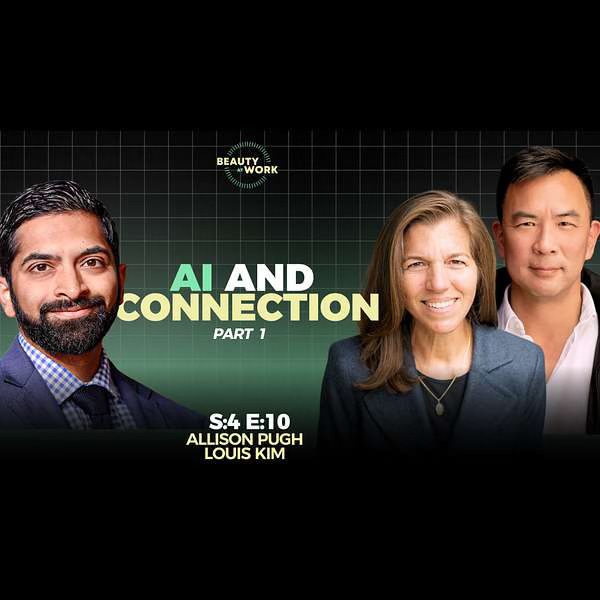
As automation, AI, and new forms of standardization have begun to shape so much of our lives, we are forced to ask: What forms of connection must never be outsourced to technology? And what happens to dignity, belonging, and recognition when relational work becomes displaced by “better-than-nothing” technological solutions?
These concerns are increasingly touching a range of professions: teachers, therapists, chaplains, physicians, care workers, and really anyone whose work relies on genuine human presence. They involve decisions being made right now about the future of work.
My guests today offer compelling insights into these questions.
Dr. Allison Pugh is Professor of Sociology at Johns Hopkins University and author of The Last Human Job, winner of the 2025 Best Book Award from the American Sociological Association. Her work examines how automation, efficiency, and quantification reshape work that relies on presence, dignity, and visibility. She introduces the concept of connective labor—the mutual work of seeing and recognizing another person and reflecting that understanding back to them.
Louis Kim is a former Vice President at Hewlett-Packard, where he led teams in developing AI-enabled technologies for healthcare and other industries. After decades in corporate leadership, he is now pursuing a Master of Divinity at Duke Divinity School, focusing on hospice and palliative care. Alongside his theological training, Louis participates in Vatican-sponsored conversations on principled AI in healthcare, exploring where technology can assist care and where it must not replace human presence.
In our conversation we explore the fragile space where technology meets connection, and ask where AI and new technologies can meaningfully assist us, what they distort, and what forms of encounter remain uniquely human.
In this first part of our conversation, we discuss:
What in-depth interviewing reveals about being truly seen
How experiences of death shape our understanding of accompaniment
The difference between emotional labor and connective labor
How automation and standardization threaten dignity and belonging
Why institutions rely on checklists, data, and control
The factors driving institutional challenges to connective labor
Why human connection is defined by unpredictability
The role of moral formation in resisting depersonalization
To learn more about Allison’s work, you can find her at: https://www.allisonpugh.com/
To learn more about Louis’s work, you can find him at: https://www.linkedin.com/in/louisjkim/
Books and Resources Mentioned: The Last Human Job: The Work of Connecting in a Disconnected World
This season of the podcast is sponsored by Templeton Religion Trust.


