


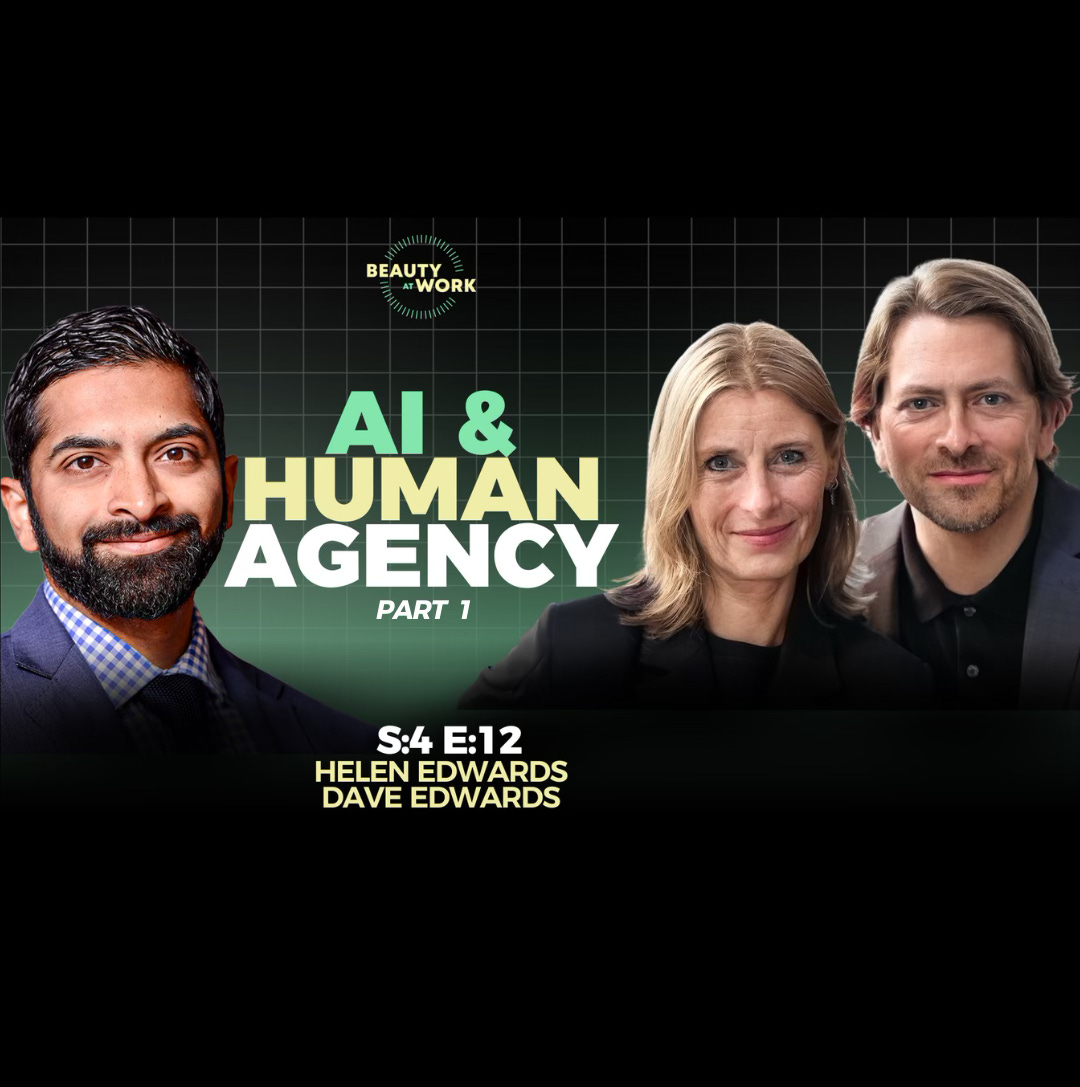
Artificial intelligence is not only changing what we can do, but may be changing how we think. As AI systems increasingly participate in writing, reasoning, and decision-making, it becomes more urgent to ask what it means to retain human agency and ensure we’re not losing our fundamental capabilities.
My guests today, Helen and Dave Edwards, have been working seriously on this question.
Helen and Dave Edwards are co-founders of the Artificiality Institute, a nonprofit research organization that helps people stay human in the age of AI. They explore how AI changes the way we think, who we become, and what it means to be human. Through story-based research, education, and community, they help people choose the relationship they want with machines, so they remain the authors of their own minds.
Before founding the Artificiality Institute, they co-founded Intelligentsia.ai, an AI-focused research firm acquired by Atlantic Media. Helen previously led large-scale technology and transformation efforts in critical infrastructure, while Dave spent years shaping creative tools at Apple and investing in emerging technologies as a venture capitalist at CRV and an equity research analyst at Morgan Stanley and ThinkEquity.
In this first part of our conversation, we discuss:
The origins of Artificiality Institute
How AI is already reshaping the way we reason, write, create, and make decisions
What happens to human reasoning and decision-making when AI becomes part of our thinking process
The difference between “drift” and intentional authorship when working with AI
Cognitive sovereignty as the central challenge of the AI era
How can people use AI deeply and skillfully
The concept of symbolic plasticity and how AI can reshape the frameworks we use to understand the world
To learn more about Helen and Dave’s work, you can find them at:
https://artificialityinstitute.org/
Books and resources mentioned:
The Artificiality, AI Culture, and Why the Future Will Be Co-Evolution (by Helen Edwards)
This season of the podcast is sponsored by Templeton Religion Trust.


